Best Sculpt Nail Salon in Tokyo for Foreigners – Nails That Last Up to 8 Weeks
Why most sculpted nails lift or break within 3 weeks — and the structural reasons behind it. How to find an English-friendly sculpt nail salon in Tokyo that can handle bold, dramatic designs. Why BARON’s clients consistently see nails lasting 6 to 8 weeks, even on extra-long sets.
If you’ve been living in Japan for a while and you want dramatic, long-lasting sculpted nails — you already know the struggle.
Finding a salon in Tokyo that does sculpt nails well is hard enough. Finding one where you can actually communicate in English, explain your vision, and walk out with exactly what you wanted? That’s a completely different challenge.
Most foreign clients in Tokyo have experienced some version of this: you show a reference photo, you nod through a consultation you only half understood, and you end up with nails that are either too short, too plain, or lifting by week three.
This guide is for anyone who wants the real answer — how sculpted nails work, what separates a great result from a mediocre one, and where to go in Tokyo if you want nails that actually last.
What Are Sculpted Nails? (And Why They’re Different from Regular Gel)
Before anything else, let’s get the terminology straight — because “sculpted nails” means different things in different countries, and Tokyo salons use specific techniques that you may not have encountered before.
The Basic Difference
Regular gel nails are applied directly on top of your natural nail. The length is limited to what your natural nail already has, or to a short plastic tip. They look clean and natural, but they have a structural ceiling — especially if you want length or dramatic 3D embellishments.
Sculpted nails (スカルプネイル in Japanese) involve building a durable structure on top of your natural nail using either a hard gel or acrylic material. This allows nail artists to create length, thickness, and shapes that simply aren’t possible with standard gel — including extra-long stiletto shapes, coffin nails, and heavy 3D designs loaded with stones and parts.
Two Main Types of Sculpt in Tokyo Salons
- Chip Sculpt (チップスカルプ) — A plastic or gel nail tip is applied to the natural nail, then coated with hard gel to create the final shape and length. This is the most common sculpt method used at specialist salons in Japan. It produces a very smooth, natural-looking extension that holds its shape under heavy embellishments.
- Acrylic Sculpt (アクリルスカルプ / フォームスカルプ) — A nail form is placed under the free edge of the natural nail, and acrylic powder mixed with liquid is sculpted directly over it. This method is popular for extreme length and maximum structural strength. Not all Tokyo salons offer this — it requires significant technical skill.
Many salons in Tokyo advertise “long nails” but are actually applying gel extensions over short tips — not true sculpt. If a salon cannot show you their sculpt work on clients with 2cm+ free edge length, they are likely not a specialist. Always ask to see before-and-after photos of sculpt sets specifically.
Why Do Sculpted Nails Lift? The Structural Reasons Most Articles Don’t Explain
If you’ve had sculpted nails that started lifting by week two or three, it wasn’t bad luck. There are specific, technical reasons why this happens — and understanding them will help you choose a salon that avoids these problems from the start.
1. Inadequate Prep Work (Preparation / プレパレーション)
The most common cause of early lifting is insufficient prep before the product is applied. Your natural nail surface has oils, moisture, and a thin layer of dead skin cells that prevent the gel or acrylic from bonding properly.
Professional prep involves removing shine from the nail surface, pushing back and cleaning the cuticle area (甘皮処理), dehydrating the nail plate, and applying a bonding agent before any product goes on. When any of these steps are rushed or skipped — which happens frequently at high-volume, low-price salons — the result is early lifting.
Nail technicians who are not sculpt specialists often underestimate how much prep is needed at the side walls and cuticle area for extension nails. On natural gel nails, a small gap doesn’t become immediately visible. On sculpt nails with length, even a 0.5mm prep gap near the cuticle will turn into visible lifting within weeks.
2. Wrong Product for the Client’s Nail Type
Not every gel works on every nail type. People with oily nail beds, naturally thin nails, or very flexible nails often need a different base product and application technique compared to people with firm, dry nail plates.
A common mistake at generalist salons is using the same product protocol on every client. This leads to inconsistent results — some clients are fine, others lift within two weeks — without any clear reason. The solution is a nail artist who assesses your specific nail type before starting and adjusts accordingly.
3. The Length-to-Strength Ratio
The longer the nail, the more leverage is applied at the base every time the nail catches on something. If the hard gel layer is not thick enough at the stress point (just above where the natural nail ends), the extension will snap or lift under pressure.
This is why many salons refuse to do very long sculpt nails — they lack the skill to build enough structural support without making the nail look bulky. A specialist knows how to layer the product to maximize strength while maintaining a natural-looking taper.
4. Incorrect Cure Time
Hard gel must be fully cured under the UV or LED lamp at each layer. Under-curing — especially in the middle layers — leads to a product that looks finished but has internal weakness. The nail may seem fine for the first week and then suddenly snap or separate from the tip. Cure time depends on the specific gel brand, lamp wattage, and layer thickness, and experienced nail artists adjust for each.
If your sculpted nails are lifting consistently before week four, do not simply push the lifted area back down or apply glue at home. Moisture can become trapped between the natural nail and the lifted product, creating the warm, dark, damp conditions that cause green nail syndrome (グリーンネイル) — a bacterial infection that turns your nail greenish and requires medical treatment. Always visit your salon for a professional fix.
How Long Should Sculpted Nails Actually Last?
Let’s be honest about what’s realistic — because there is a lot of conflicting information online.
Average at a generalist salon: 3 to 4 weeks before noticeable lifting or visible regrowth gap.
At a sculpt specialist salon with proper prep: 5 to 8 weeks before the nails require a fill or full replacement.
The difference is not marketing language. It comes down to: (1) the quality of the prep, (2) the skill of the nail artist in building structure, (3) the products used, and (4) how well the client maintains them at home.
What “8 Weeks” Actually Means
When a salon says nails can last up to 8 weeks, this does not mean you should wait 8 weeks between visits. It means the structural integrity of the sculpt — meaning it won’t snap, lift, or separate — is maintained for that period under normal conditions.
Nails grow approximately 3mm per month on average. By week 4, you’ll have a visible gap of about 3mm at the cuticle. By week 6 to 8, this gap is around 5 to 6mm. Whether that gap bothers you aesthetically is a personal choice — but the nails themselves are still intact and not lifting.
For most clients, a fill (付け替え) every 3 to 4 weeks is recommended for appearance reasons. For clients who want to minimize salon visits and are comfortable with visible regrowth, stretching to 6 or 7 weeks is perfectly feasible at a specialist salon.
💅 At BARON, the sculpt nails are designed to last:
BARON’s nail artists specialize in sculpted nails and undergo intensive training before performing any client services. The salon uses a prep-first philosophy — every set begins with thorough cuticle work and nail plate preparation, which is the primary reason clients consistently report nails lasting well beyond the industry average. For clients who want the maximum hold, BARON recommends a 3 to 4 week fill cycle to maintain the look — but the structural durability supports up to 8 weeks.
What to Look for When Choosing a Sculpt Nail Salon in Tokyo as a Foreigner
Tokyo has hundreds of nail salons. Many of them are excellent. But as a foreign client — especially if you want sculpted nails with dramatic length or complex designs — there are specific things to verify before booking.
1. Do They Actually Specialize in Sculpt?
Many salons offer sculpt nails as one service among many. Specialist sculpt salons are different — their staff train specifically in extension and sculpt techniques, their portfolios are filled with long nail sets, and they have the products and infrastructure for structural work.
How to check: Look at their Instagram portfolio. If the majority of their nail photos feature short to medium natural gel styles with only a few extension sets mixed in, they are a generalist. If the vast majority of their work shows extensions, elaborate 3D sets, and long sculpt nails — they are a specialist.
2. Can You Communicate Your Design?
This is non-negotiable. Even a technically brilliant nail artist cannot deliver your vision if they cannot understand what you want. Look for salons that:
- Accept design reference photos via Instagram DM before your appointment
- Have English-capable staff or offer English consultation support
- Respond to inquiries in English on social media
Sending a DM on Instagram with your reference photo before visiting is the most effective way to confirm the salon can handle your request — and to get a price estimate before you arrive.
3. Private Rooms vs. Open Floor
Most Tokyo nail salons operate on an open floor — multiple clients side by side at rows of tables. For many people this is fine. But if privacy matters to you, or if you find open salon environments stressful, fully private room salons exist and are worth seeking out.
Each seat at BARON is its own private room — no shared space, no other clients visible, just you and your nail artist. For first-time clients especially, this makes a significant difference in how relaxed and communicative the consultation can be.
4. Paragel Option (パラジェル)
Paragel is a low-odor, acid-free gel brand that is gentler on the natural nail. It is particularly beneficial for clients with thin, sensitive, or damaged nails. Many salons charge extra to use Paraegel instead of standard gel. If nail health is a concern for you, it’s worth asking whether this is available and at what cost.
5. Designs Other Salons Won’t Do
If your reference photo is bold — heavy stones, 3D sculpted elements, fan art designs, extreme length — verify explicitly that the salon can execute it. Some salons decline complex or very long nail requests entirely. Specialist salons with trained staff will confirm your design is within their capability before you sit down.
Gal Nails: Why Tokyo Is the Only Place in the World to Get Them Done Properly
“Gal nails” (ギャルネイル) is a Japanese nail aesthetic that has no real equivalent outside Japan. Rooted in the gyaru subculture of the 1990s and 2000s, gal nails are defined by dramatic length, heavy embellishment, maximalist attitude, and unapologetic self-expression.
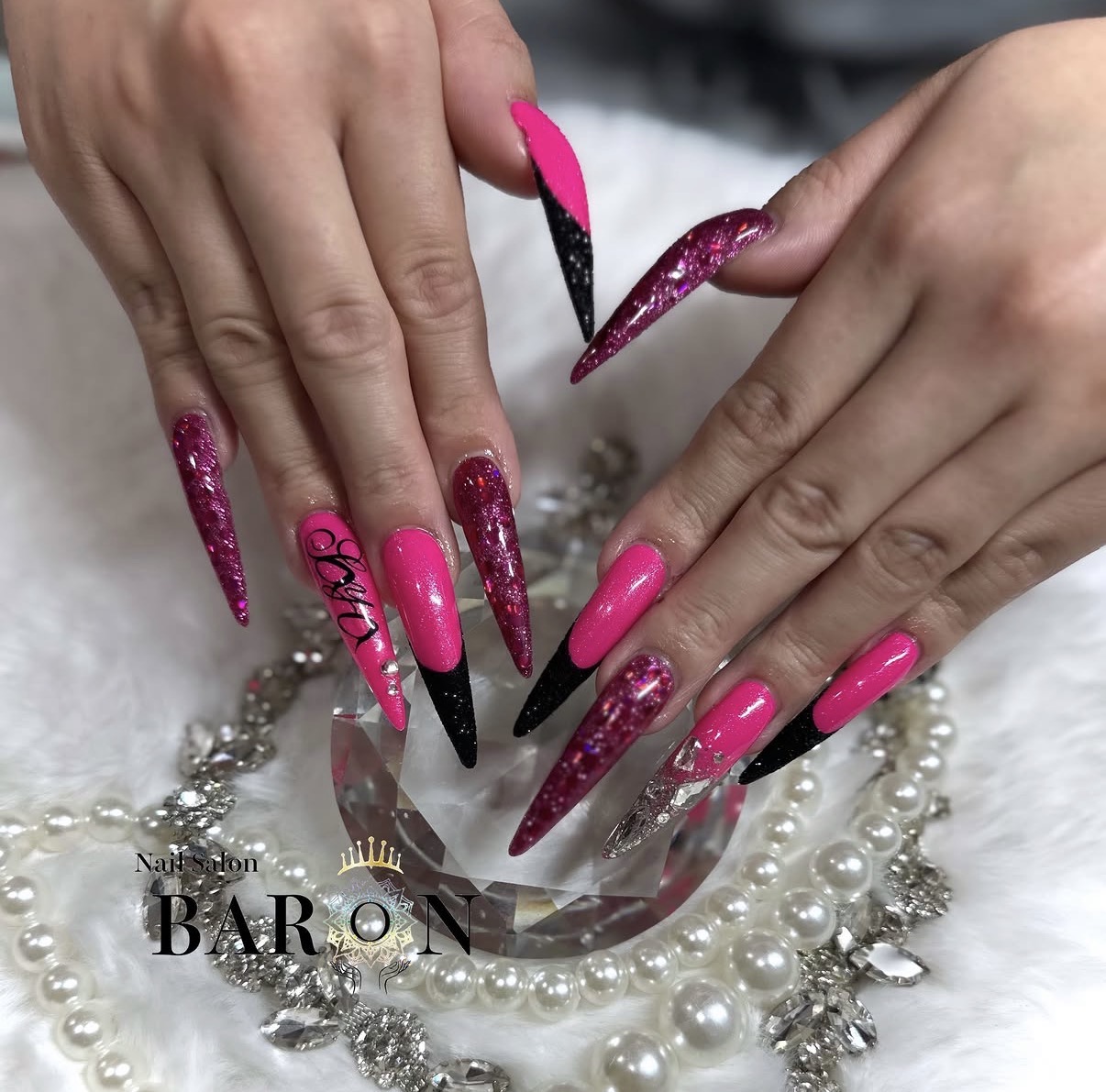
Think: stiletto-shaped nails extending 3 to 5cm, completely covered in rhinestones, 3D motifs, foils, and oversized decorative parts. The kind of nails that stop people in the street. The kind that get shared on Pinterest and TikTok thousands of times.
Outside Japan, nail salons willing and able to do this style are extremely rare. The technical difficulty — building a structure long enough and strong enough to hold heavy 3D elements without snapping — requires sculpt expertise that most international salons simply don’t have.
In Tokyo, there are salons that do nothing but this. And for foreigners living in Japan or visiting Tokyo, getting a gal nail set is an experience that is genuinely unique to being here.
The weight of heavy stones and 3D parts creates a constant downward force on the nail. Without the right structure underneath — the right thickness at the right points — the nail will snap or the parts will fall off. Nail artists who specialize in gal nails have learned specifically how to build for weight distribution, which is why a gal nail set from a specialist lasts significantly longer than the same design from a generalist.
How to Book a Sculpt Nail Appointment in Tokyo as a Foreigner: Step by Step
If you’ve never booked a nail appointment in Japan before, here is exactly how the process works at English-friendly specialist salons.
- Find reference photos. Before reaching out, spend time on Instagram or Pinterest finding 3 to 5 photos that represent what you want. You don’t need to find the exact design — just enough to communicate the length, shape, color, and embellishment style you’re going for.
- Send a DM on Instagram. English-friendly salons accept consultations via Instagram DM. Send your reference photos with a brief message explaining what you’re looking for: length, design style, and any specific requests. Ask for a rough price estimate while you’re at it.
- Confirm your appointment date and time. Once the salon has confirmed they can do your design, book your time slot. For a first visit with a complex sculpt design, allow 2 to 3 hours minimum.
- Arrive a few minutes early. Nail appointments in Japan start on time. Arriving late compresses your appointment, which affects the quality of the work — especially for complex designs where the artist needs every minute.
- Consultation at the start. A good salon will go through your reference photos with you at the start of the appointment, confirm the design, clarify any details, and make sure you’re aligned before starting. Don’t skip this — it’s where miscommunication gets caught.
- Follow aftercare instructions. Ask your nail artist about specific aftercare for your nail type. The instructions in the next section are a general guide, but your artist will know the specifics of how your nails behaved during application.
Aftercare for Sculpted Nails: What Actually Moves the Needle
Most aftercare advice online is generic and unhelpful — “avoid water,” “don’t pick,” “use nail oil.” Here is the information that actually makes a difference to longevity.
Nail Oil Is Not Optional
The area where sculpted nails are most vulnerable to lifting is the cuticle margin — the thin line where the product meets your skin. When this area dries out, the skin contracts and can pull slightly at the product edge, creating micro-gaps that expand over time.
Applying nail oil (ネイルオイル) to the cuticle area twice daily — morning and before bed — keeps this skin hydrated and dramatically reduces the speed at which this micro-lifting begins. The oil doesn’t need to be expensive. Any cuticle oil with jojoba, argan, or vitamin E works.
Water and Chemicals
Extended soaking in water — long baths, swimming pools — softens the gel and can weaken the bond at the edges. This doesn’t mean you can’t shower or wash dishes normally. It means that if you’re swimming for an hour daily, your nails will not last as long as someone who isn’t. Wearing gloves for prolonged washing up helps.
Cleaning products containing bleach or strong solvents can degrade the gel surface and affect color over time. Gloves are recommended for any cleaning involving these products.
Don’t Use Your Nails as Tools
This sounds obvious but is the most common mechanical cause of snapping — using extended nails to pry open packaging, type hard on keyboards without adjusting technique, or pick at surfaces. Extended sculpt nails change your hand mechanics. Most clients adapt within a week, but the first few days are when snapping is most likely.
The 7-Day Rule
If any lifting or chipping occurs within 7 days of your appointment, visit your salon immediately. Most specialist salons will fix early issues at no charge — this is industry standard because early lifting within 7 days is almost always a salon-side issue (prep, cure, or application error), not a client-side one.
Nail artists track which clients experience early lifting and which don’t. Over time, a good nail artist builds a client profile — your nail type, oil levels, lifestyle — and adjusts their technique accordingly. This is one reason why regular clients at specialist salons see dramatically better longevity than one-time visitors. The nail artist has learned your nails.
Common Mistakes Foreigners Make at Japanese Nail Salons (And How to Avoid Them)
Mistake 1: Not Sending a Design Reference in Advance
Walking into a Japanese nail salon and describing your desired design verbally — especially in a second language — almost always leads to a result that’s different from what you imagined. Send reference photos before you arrive. Every English-friendly salon in Tokyo accepts this.
Mistake 2: Booking a Generalist Salon for Specialist Work
Not every nail salon can do sculpted nails well. Booking a generalist salon for a complex sculpt set often results in the salon agreeing to do it, then struggling — and you walking out with nails that lift within two weeks. Always verify the salon’s sculpt portfolio before booking.
Mistake 3: Underestimating the Time Required
A full sculpt set with 3D embellishments at a specialist salon takes 2 to 4 hours. Booking a two-hour slot for a four-hour design means the artist will rush, cut steps, or have to simplify your design. When making a first appointment, ask the salon how long your desired design will take and book accordingly.
Mistake 4: Choosing Based on Price Alone
Tokyo nail prices range from ¥3,000 for basic gel at volume salons to ¥20,000+ for full sculpt sets with heavy 3D work. Choosing the cheapest option for sculpt nails consistently leads to disappointment — the cost difference exists for real reasons (skill, products, time, training). A good sculpt set is a long-term investment in nails that won’t break or lift.
Mistake 5: Picking at Lifted Nails Instead of Booking a Fix
When a nail lifts at the edge, it’s tempting to pick at it or push it back down. Don’t. Picking at lifted sculpt nails can peel layers off your natural nail, causing damage that takes months to grow out. Any lifting should be addressed at the salon — either a fill or a complete reapplication of the lifted nail.
Sculpted Nails for Different Nail Types: What Works Best for You
Thin or Fragile Natural Nails
Chip sculpt over a gel tip is often the better option — it protects the natural nail from mechanical stress while the extension does the work. Paraegel base is worth requesting, as the acid-free formula is gentler on compromised nail plates. Avoid acrylic if your natural nails are thin, as the monomer can dry out the nail further.
Oily Nail Beds
Oily nails are the most common reason for early lifting. The solution is more thorough dehydration during prep and a primer specifically formulated for oily nails. If you’ve had consistent lifting problems at other salons, tell your nail artist explicitly that your nails are oily. A skilled artist will adjust their prep protocol.
Naturally Short Nails or Bitten Nails
Sculpt nails are actually ideal for short or bitten nails — the extension structure does not depend on your natural nail length. You can go from severely short natural nails to 4cm+ sculpt extensions in a single appointment. This is one of the main reasons people seek out sculpt specialists.
Long Natural Nails
If you have naturally long nails and want to add some length and structure, chip sculpt works well as an overlay to strengthen the natural nail while adding modest extra length. For clients who want dramatic extra length beyond what they already have, a full sculpt set is the right approach.
About Nail Salon BARON: Tokyo’s Sculpt Specialist
BARON is a sculpted nail specialist salon with six locations across Tokyo, Kanagawa, and Osaka — Shinjuku, Ikebukuro, Machida, Hiratsuka, Hon-Atsugi, and Shinsaibashi.
The salon’s focus is sculpt and gal nails: bold, dramatic, long-lasting sets that other salons frequently decline. BARON is the go-to salon for models, influencers, and clients who have struggled to find a salon that can execute their vision. With over 10,000 clients per year and a 4.8-star rating across all locations, the salon has a documented track record in high-complexity nail work.
For foreign clients: BARON accepts design consultations and estimates via Instagram DM (@nail_baron_japan), and offers a fully English page at nailbaron.com/en/. New clients receive 10% off their first visit when they follow the Instagram account.
Every seat is a private room. Paraegel upgrades are complimentary. The nail parts inventory exceeds 1,000 types, covering everything from subtle accent stones to oversized 3D statement pieces.
Frequently Asked Questions
Q. Can foreigners who don’t speak Japanese get their nails done in Tokyo?
A. Yes. English-friendly specialist salons in Tokyo accept consultations via Instagram DM in English. Sending reference photos before your visit handles most of the communication — you don’t need to speak Japanese to get the nails you want.
Q. How much do sculpted nails cost in Tokyo?
A. Prices vary by salon, design complexity, and length. A standard chip sculpt set at a specialist salon typically starts around ¥10,000 to ¥15,000. Heavily embellished sets with 3D parts can reach ¥20,000 to ¥25,000. Always ask for an estimate in advance by sending your reference photos.
Q. How long do sculpted nails last in Tokyo?
A. At a generalist salon, expect 3 to 4 weeks before lifting begins. At a specialist salon with thorough prep and skilled application, sculpted nails can last 6 to 8 weeks structurally. Most clients book a fill every 3 to 4 weeks for aesthetic reasons regardless of structural durability.
Q. What is the difference between chip sculpt and acrylic sculpt?
A. Chip sculpt applies a nail tip to the natural nail and coats it with hard gel. Acrylic sculpt uses a nail form and builds the extension with acrylic powder and liquid. Both create durable extended nails. Chip sculpt is more common at specialist salons in Japan and tends to have a smoother appearance. Acrylic sculpt offers maximum structural strength for extreme lengths.
Q. Are sculpted nails bad for your natural nails?
A. When applied and removed correctly by a skilled technician, sculpted nails do not damage natural nails. Damage occurs from improper prep (filing too aggressively), forced removal at home, or picking at lifted product. Professional application and removal at a specialist salon keeps natural nails healthy.
Q. Can I get sculpted nails if I’ve never had my nails done before?
A. Yes. First-timers are welcome at specialist salons. A consultation at the start of the appointment will walk you through the process, discuss your design, and ensure you’re comfortable before anything begins. You don’t need any prior nail experience.
Q. How do I remove sculpted nails safely?
A. Hard gel sculpt nails must be filed or drilled down before soaking — they don’t dissolve in acetone the way soft gel does. This requires a nail drill and specific technique. Always have your sculpt nails removed at a salon, not at home. Forced removal causes the kind of nail plate damage that takes 3 to 6 months to grow out completely.
Q. What are gal nails?
A. Gal nails (ギャルネイル) are a maximalist Japanese nail style featuring dramatic length, heavy rhinestones, 3D decorative elements, and bold color combinations. Rooted in Japan’s gyaru culture, this style is virtually unique to Japan and requires sculpt expertise to execute properly. Most salons outside Japan cannot do gal nails at a high level.
Q. Can I bring my own design reference?
A. Yes. Sending a screenshot or photo from Instagram or Pinterest as your design reference is the standard way to communicate what you want. Send it via DM before your appointment so the salon can confirm feasibility and give you an accurate time and price estimate.
Q. What is Paraegel and do I need it?
A. Paraegel (パラジェル) is an acid-free, low-odor gel brand that bonds without requiring heavy filing of the natural nail surface. It is gentler on thin, sensitive, or damaged nails. Most salons charge extra for Paraegel. If your nails are thin or you have a history of gel-related sensitivity, it is worth requesting.
Q. Do sculpted nails break easily?
A. Properly applied sculpt nails from a specialist salon have significantly more structural strength than natural nails or regular gel nails. Breakage typically occurs at the stress point above the natural nail tip — and experienced nail artists build this area with extra thickness to prevent it. The risk of breakage is dramatically lower at a specialist salon versus a generalist one.
Q. Is there a minimum length for sculpted nails?
A. No. Sculpt can be applied at any length — from very short (even on bitten nails) to extreme lengths exceeding 5cm. The length you choose is entirely up to you, and a skilled artist can build structural support for any length.
Summary: What to Remember
📌 Key takeaways:
- Sculpted nails last 6 to 8 weeks at specialist salons — significantly longer than the 3 to 4 week average at generalist salons.
- Early lifting is caused by inadequate prep, wrong product for your nail type, or insufficient structural support — not by the technique itself.
- Send reference photos via Instagram DM before booking to confirm design feasibility and get a price estimate.
- Gal nails require sculpt expertise — not every Tokyo salon can execute dramatic, heavily embellished designs.
- Daily cuticle oil application is the single most impactful thing you can do to extend nail longevity at home.
- Never force-remove sculpted nails at home. Always have them professionally removed.
If you’re looking for a sculpt nail salon in Tokyo that can handle your vision — whether that’s a clean, minimal extension set or a fully loaded gal nail set with 3D stonework — the key is finding a specialist, not a generalist.
Take the time to review a salon’s portfolio, send your reference photos before you book, and verify that the studio works specifically in sculpt. The difference in result — and longevity — is significant.
💅 Nail Salon BARON
Tokyo’s sculpt & gal nail specialist · 6 locations
Private rooms · Paraegel complimentary · Up to 8-week hold · English consultations via Instagram DM
📸 @nail_baron_japan — DM for consultation
📍 Locations