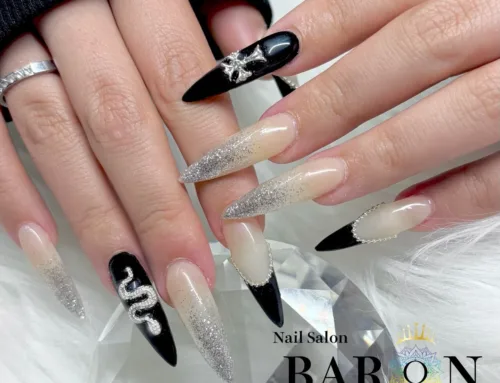
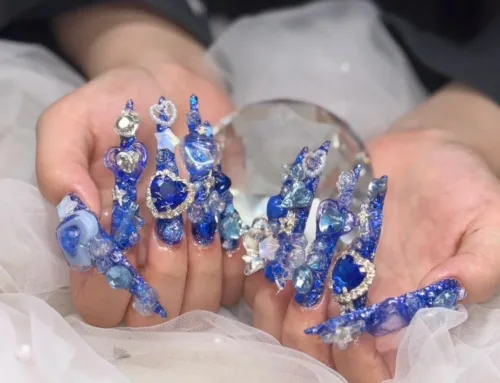
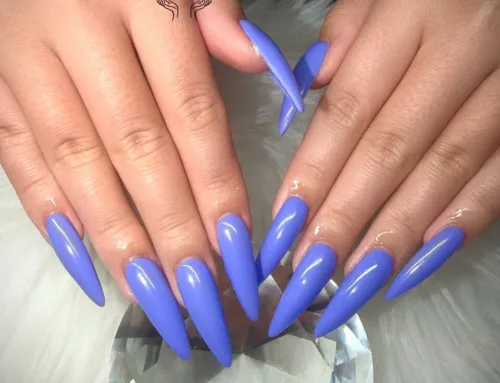
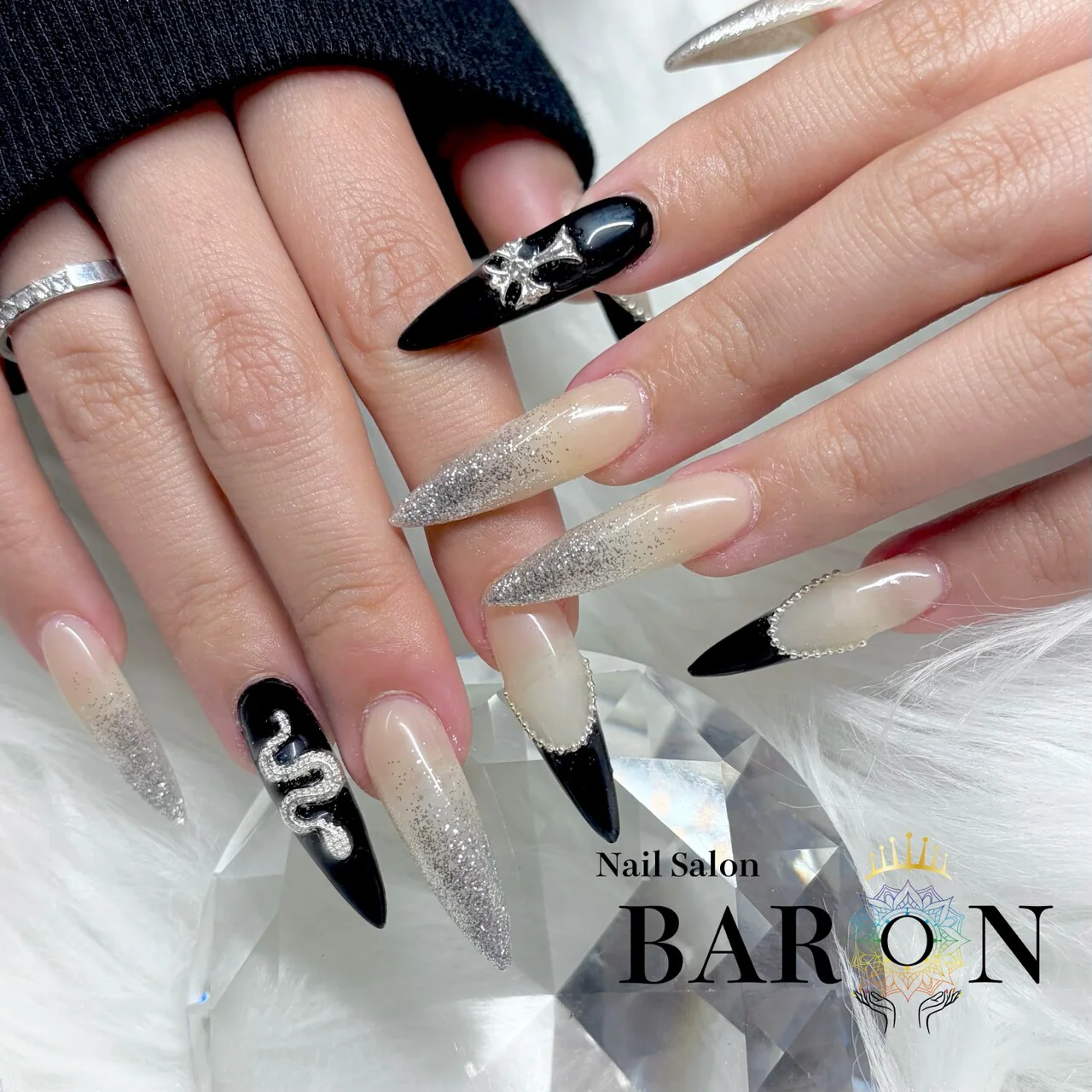
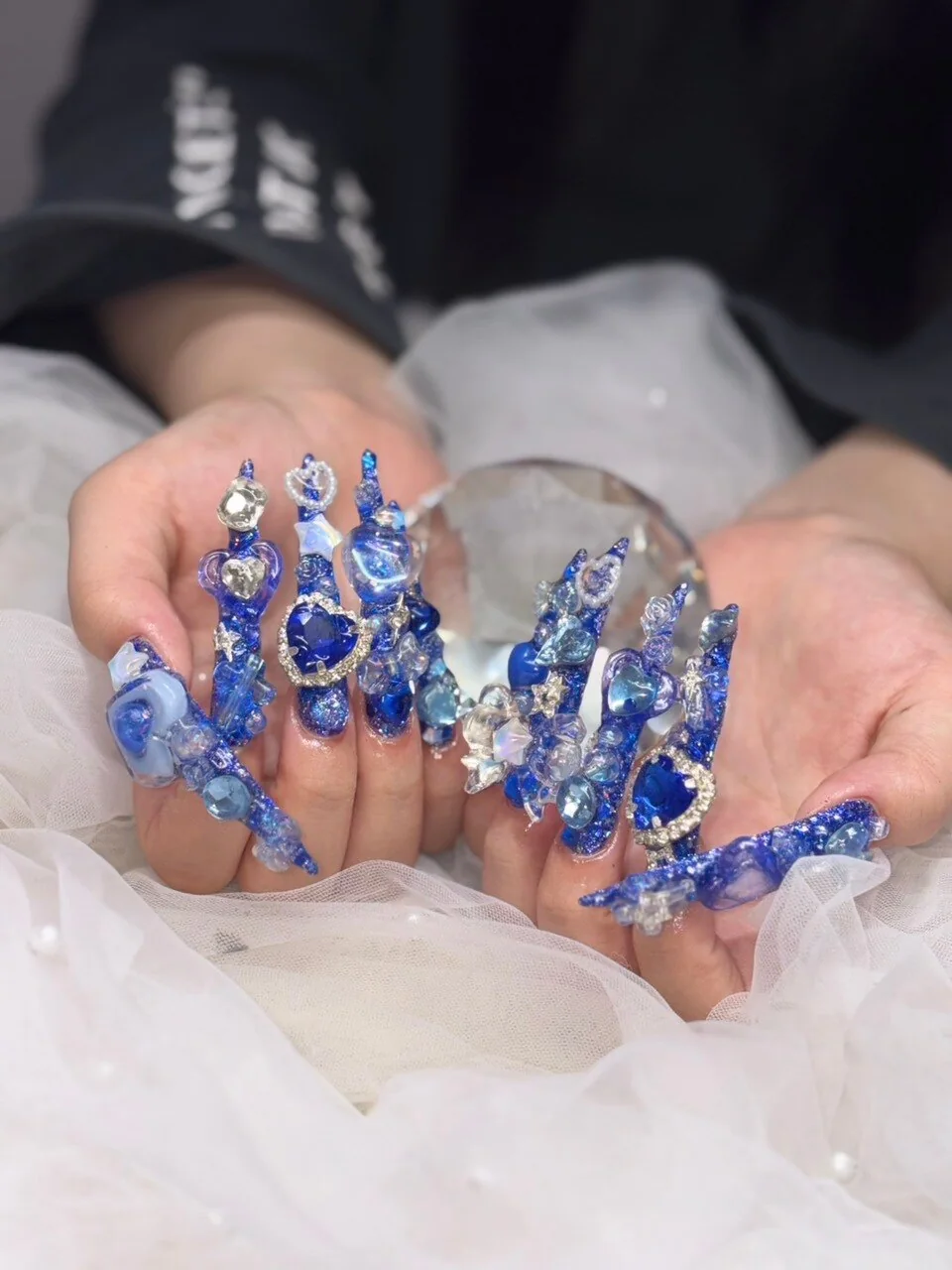
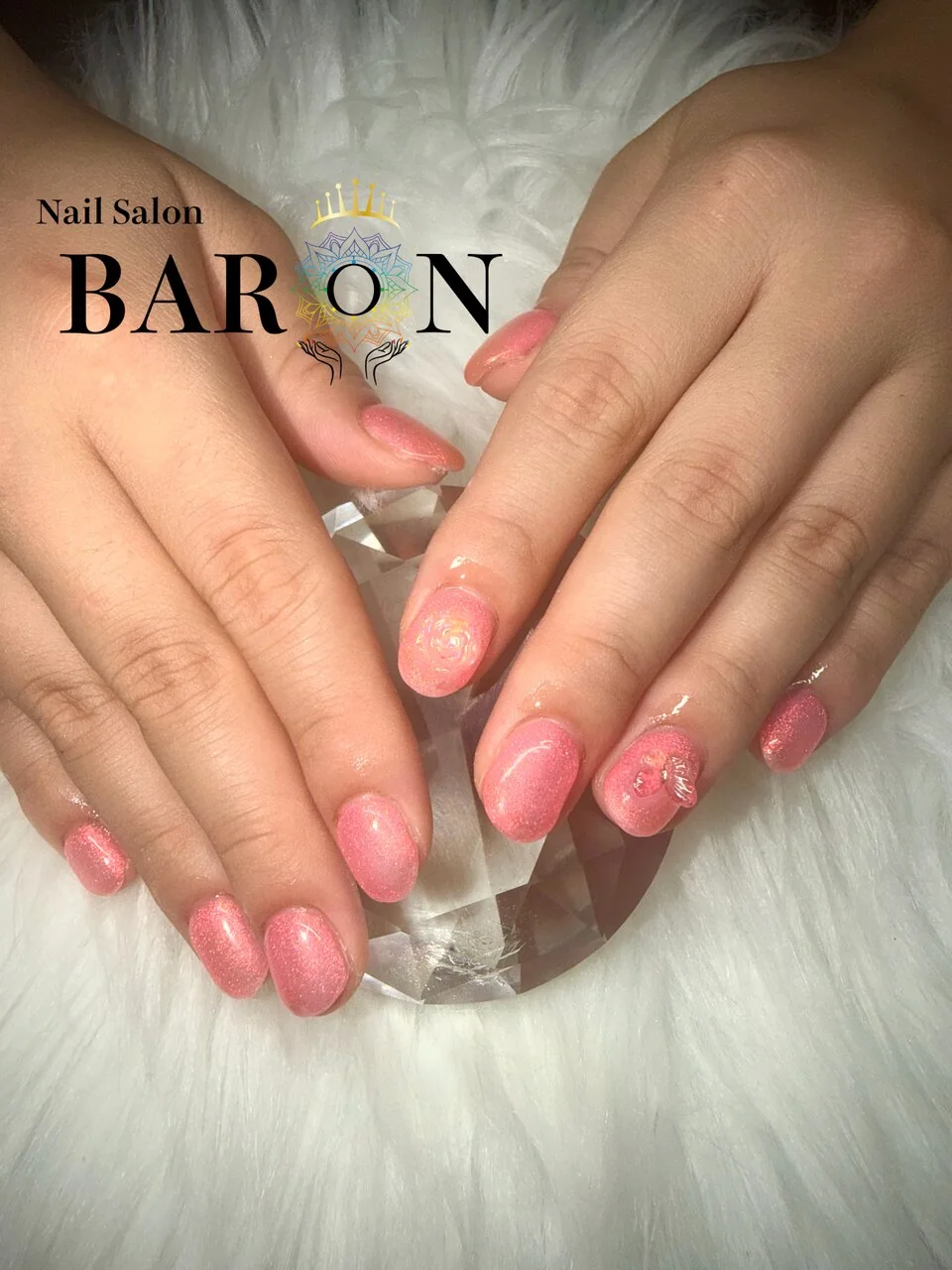
Give two different hands one shared idea
One hand can be soft and the other dramatic. You might want different colors, different accents or two sides of the same theme. The useful question is what will connect them when both hands appear together. Before your Ikebukuro appointment, choose one shared element and decide where the differences belong.
This guide focuses on that left-and-right layout. For an overview of BARON and its locations, start with the English salon guide. For appointment preparation, use the Ikebukuro booking guide.
Choose one anchor before adding contrasts
An anchor is a detail that appears on both hands. It gives the artist a clear direction even when the individual nails differ. Choose the element you would most dislike losing:
- One shared color: pale pink appears on both hands, with black accents on one and white accents on the other.
- One repeated motif: a small star is the link between two different color palettes.
- One visual rhythm: each hand has two decorated fingers and three quieter fingers, even though the decorations differ.
You can combine anchors, but identify the most important one. “Both hands must include blue; the accent details are flexible” is easier to interpret than a folder of unrelated favorites.
Decide how different the hands should feel
Start with a simple spectrum. At the subtle end, keep the base colors and change only the accent placement. In the middle, reverse the main and accent colors. At the bold end, give each hand its own palette while repeating a motif or arrangement.
If you want contrasting shapes or lengths as well, raise that separately. Those choices affect more than the appearance of the artwork, and the artist needs to assess whether your proposed combination is suitable. A difference in decoration does not require a difference in length.
Label your own left and right hands
Write “my left hand” and “my right hand” above two lists. Photos can be mirrored, and a hand on the left side of an image may not be the person’s left hand. Name the fingers: thumb, index, middle, ring and little finger. Avoid “the second nail in this picture” when you can point to a labeled finger instead.
Also mark your dominant hand and any placement concern. If a prominent accent is important, explain where you want it seen: while holding a bag, taking a photo or resting both hands together. Ask whether a flatter interpretation would suit the contact points you use most.
Three layout briefs you can adapt
1. Reverse the palette
“My left hand: mostly milky pink with black details. My right hand: mostly black with pink details. Keep the shape consistent and repeat one small heart on each ring finger. The pink-and-black balance matters more than copying a particular heart.”
This gives the hands a strong connection without requiring every finger to match. Confirm the actual colors and how opaque they should look.
2. Quiet hand and statement hand
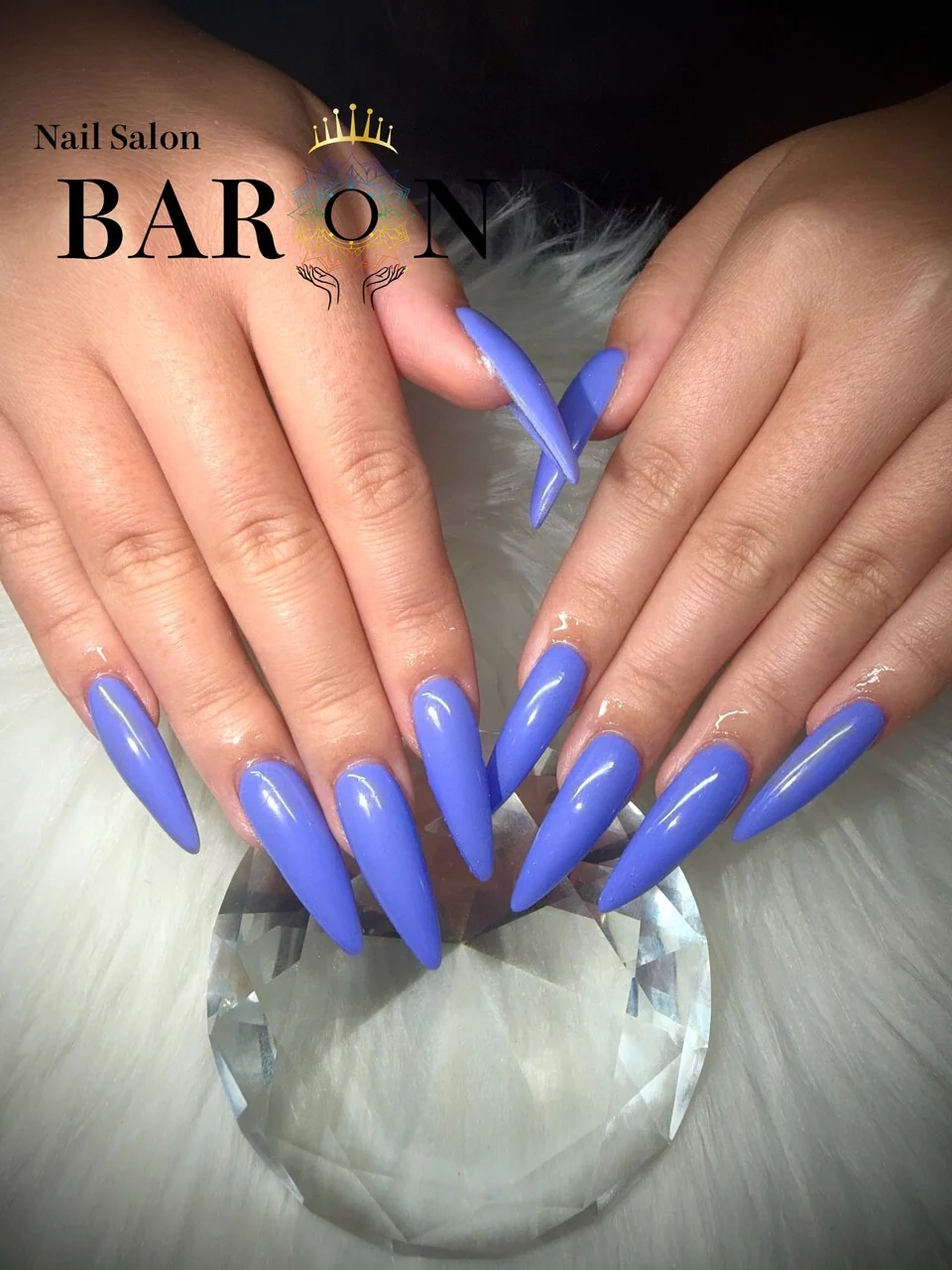
“My left hand: simple blue with one small accent. My right hand: the same blue with more decoration on the middle and ring fingers. Please leave the thumbs comparatively simple. I am flexible about the exact decorative pieces.”
This is useful when you enjoy an uneven amount of detail. Check the proposed placement and available options before treating any reference accessory as agreed.
3. Two moods with one symbol
“My left hand: light, soft colors. My right hand: dark, contrasting colors. Please repeat a star motif on both hands. I would prefer flat details, and I can simplify the background if necessary.”
These are sample requests, not confirmed BARON menu combinations. Their purpose is to show which visual decisions are fixed and which can change.
Check the whole set before choosing extra details
Read your two lists side by side. Is the shared idea visible? Are the busiest fingers intentional? Would you still like the design if one specific part were unavailable? Ask the artist to confirm the left/right plan and total scope before work begins.
Browse real examples on BARON’s nail-design Instagram. Send your labeled layout, preferred Ikebukuro appointment date and reference images by official Instagram DM or LINE. Ask which elements can be accommodated for your appointment before settling on the final set.