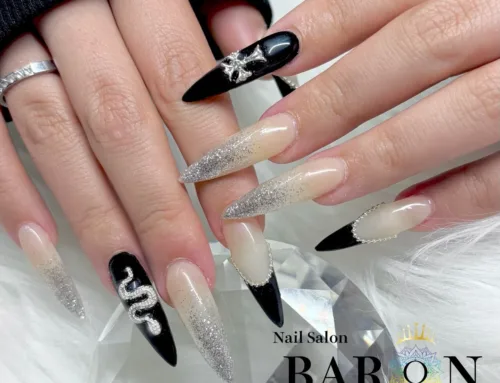
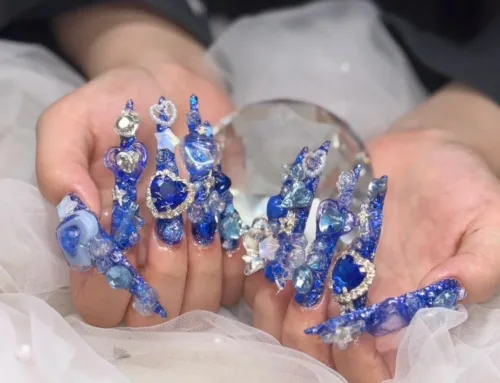
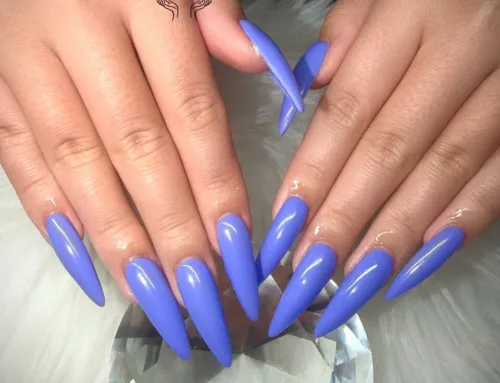
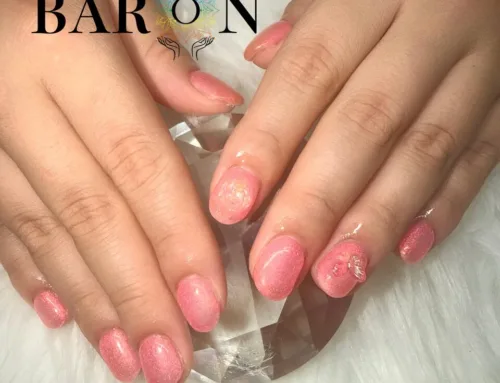
You can arrive with preferences rather than a finished design
Your first nail consultation can feel like a series of decisions you do not yet know how to make. A useful approach is to agree on the larger choices first, then work toward the smaller details. You do not need to know every technical term to explain what you like, what worries you or what needs a second look.
For salon information, see BARON’s English guide. The Hiratsuka booking guide covers appointment preparation. This article is about participating in the conversation once the design is being discussed.
1. Explain your starting point and daily needs
Show your current nails and say whether you are wearing an existing salon set or another product. If you know what it is, share that information; if you do not, say so. Describe the result you want without guessing the service name.
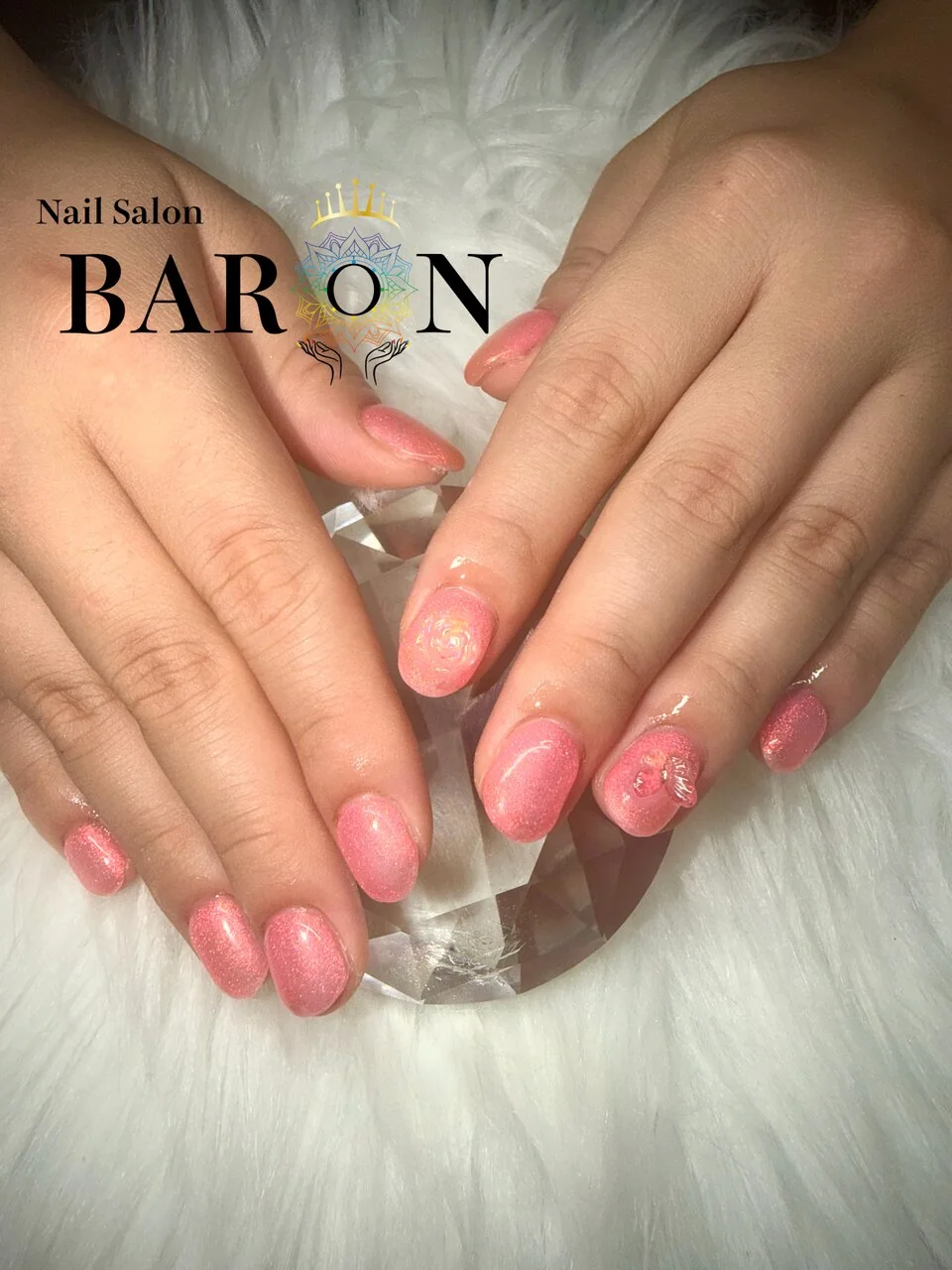
Then mention the tasks that matter to you. Typing, fastening jewelry or handling small items may influence your preferred length and placement. You can say, “I want something noticeably different, but this is my first time wearing longer nails.” That gives the artist more context than “Anything is fine.”
2. Agree on length and shape before artwork
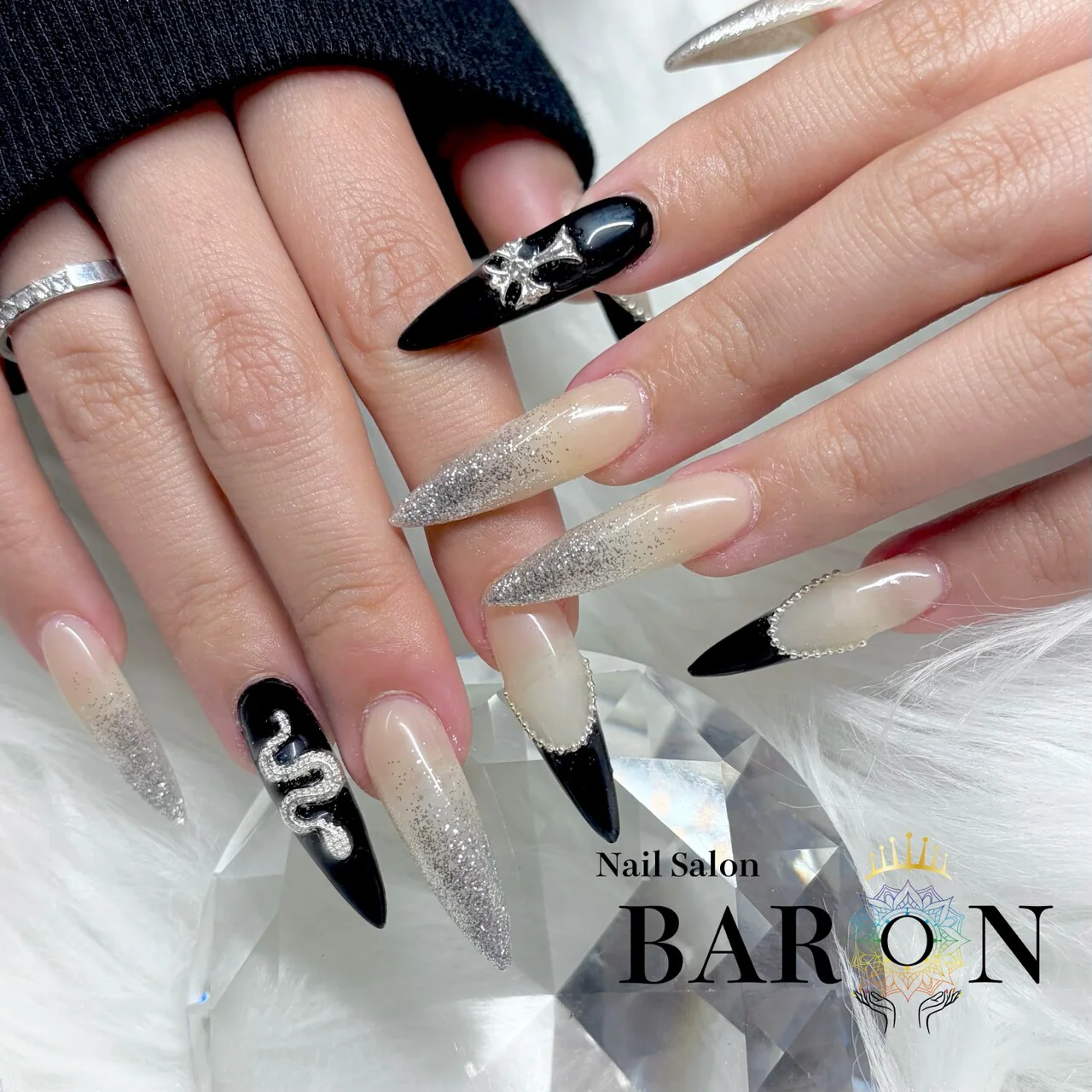
Length and shape provide the space for the design. Ask the artist to clarify what they recommend and how it relates to your reference. If you cannot picture the proposal, ask how the length can be shown or explained before it is finalized.
- “Could you show me what you mean by that length?”
- “I like the shape in this photo, but I would prefer a shorter version.”
- “Which parts of the design would need to change at my preferred length?”
If extensions are part of the plan, ask which system will be used. BARON’s main extension approach uses full-cover tips; it differs from traditional liquid-and-powder acrylic. If a particular material matters to you, confirm it explicitly instead of relying on the word “sculpted.”
3. Check the color and how much it covers
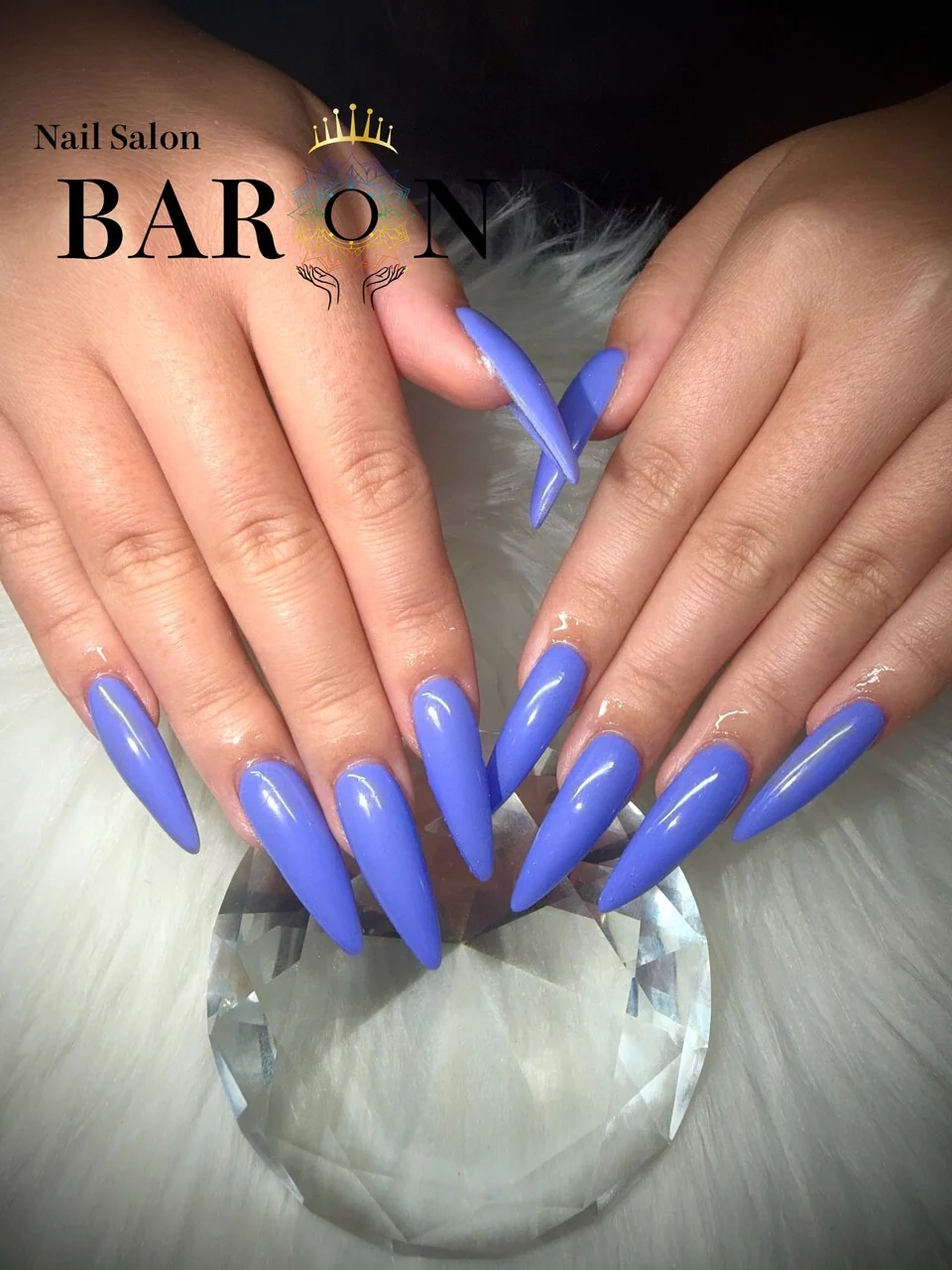
A saved picture may show a color you like while hiding how transparent it is. Ask to see the available color references and explain whether you want a translucent look or stronger coverage. Say what you notice: too pink, too beige, too dark or too transparent.
“I like this color family, but I want less of my natural nail to show” is a practical request. If you are uncertain, ask which choice the artist is proposing and what the finished appearance is expected to be. Do this before application rather than assuming a later layer will produce the effect you imagined.
4. Confirm placement and the amount of decoration
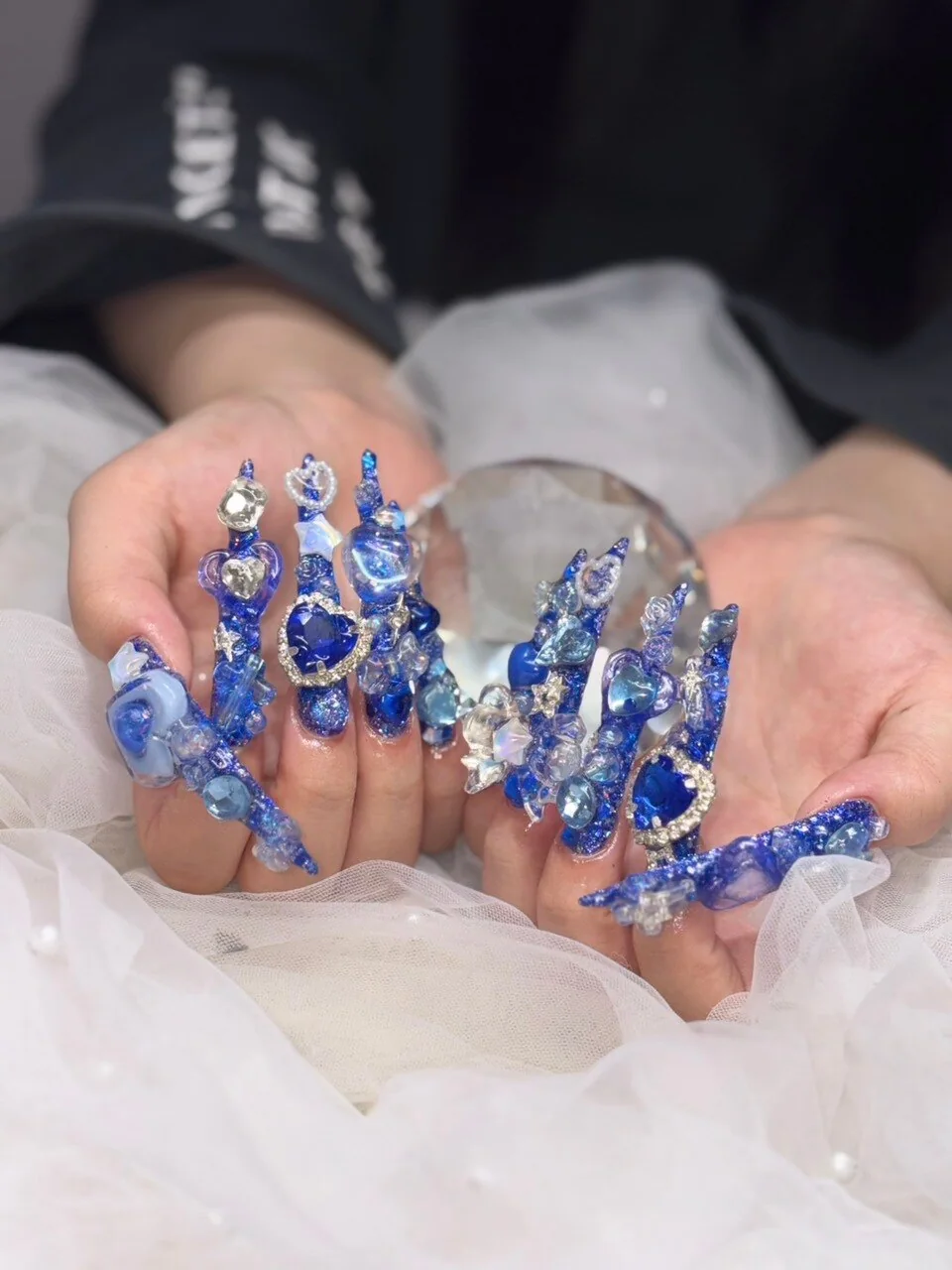
Point to the actual fingers when discussing accent nails. Clarify whether both hands should match, whether thumbs are included and which elements are flat or raised. If your reference contains many details, name the two or three that matter most.
You might say, “The ring-finger accent is important. The other fingers can be simpler,” or “I want the same colors, but less decoration.” Ask about alternatives if a particular part or technique cannot be accommodated. A reference is a discussion tool; exact reproduction should not be assumed.
5. Repeat the agreed scope before work proceeds
Briefly read back the choices in plain language: length, shape, base color, accent fingers and any additional work. Confirm the total price and expected appointment duration for that actual plan, including any removal or extensions. Ask the artist to check with you before adding something that changes the agreed scope or cost.
A useful final question is: “Have I understood correctly: this length, this color and these two accent nails?” It creates an opportunity to catch a small misunderstanding before it becomes part of the finished design.
Useful phrases when you need a pause
- “Could we check this detail before continuing?”
- “I do not understand that term. Could you show me or explain it another way?”
- “Please give me a moment to compare the options.”
- “That feels uncomfortable. Please stop so we can check.”
Several BARON staff speak English, and translation apps can help, but an English-speaking artist is not guaranteed at every appointment. Short sentences, labeled images and one question at a time can make the discussion clearer. Ask in advance if particular language support is important.
Explore BARON’s design Instagram, then send your first-visit questions and preferred Hiratsuka date through official Instagram DM or LINE.